Talenta Community Service Program 2025: USU Encourages the Implementation of Sustainable Tourism in Tongging Village
Published At
04 August 2025
Published By
Fenny Julistine Tarigan
Tongging Village is known as one of the leading destinations in Karo Regency, thanks to its stunning natural scenery, including the panorama of Lake Toba and the Tongging Geosite, which is part of the Toba Caldera Geopark
TONGGING, Waspada.co.id – Tongging Village is known as one of the leading destinations in Karo Regency, thanks to its stunning natural scenery, including the panorama of Lake Toba and the Tongging Geosite, which is part of the Toba Caldera Geopark. This potential makes Tongging a strategic point in the development of tourism in North Sumatra.
However, like many other tourist destinations, Tongging faces challenges in maintaining environmental cleanliness, ensuring access to clean water, managing waste, and stabilizing the prices of goods and services.
Through a sustainable tourism approach, these challenges can be addressed systematically and through community participation.
Sustainable tourism is not only about protecting nature, but also about building good governance, strengthening the local economy, and preserving cultural heritage. Tongging Village possesses strong social and natural capital to serve as a model for sustainable tourism villages in North Sumatra.
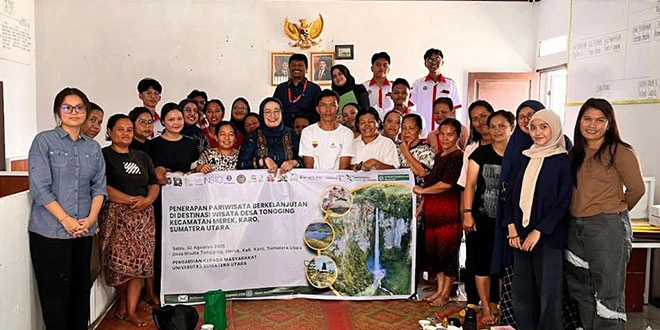
Universitas Sumatera Utara (USU), through the Talenta Community Service Program 2025, conducted outreach and a Focus Group Discussion (FGD) in Tongging Tourism Village, Merek District, Karo Regency.
This activity reflects USU’s commitment to supporting the development of tourism villages based on sustainable tourism—an approach that not only focuses on economic improvement, but also emphasizes environmental conservation, local cultural preservation, and community welfare.
The USU Community Service Team, led by Prof. Ir. Nurlisa Ginting, M.Sc., Ph.D., along with team members Dr. Wahyuni Zahrah, ST., MS., and Dr. Anthoni Veery Mardianta, ST., MT., IAP, involved USU students and alumni, and was supported by the Tongging Village Administration, Pokdarwis (Tourism Awareness Group), and local residents.
This activity also received support from the Head of the Department of Culture, Youth, Sports, and Tourism of Karo Regency, Munarta Ginting, SP, indicating the active role of the Karo Regency Government in promoting sustainable tourism development in Tongging.
The FGD, held on 2 August 2025, served as an educational forum for residents to understand the principles of sustainable tourism.
The discussion emphasized four main pillars:
Transparent and Participatory Governance: Encouraging community involvement in decision-making, destination management, and supervision of tourism activities.
Socio-Economic Empowerment: Emphasizing the importance of involving local residents in tourism-related economic activities such as homestays, culinary services, handicrafts, and guiding services.
Cultural Preservation and Local Identity: Highlighting traditional values, folklore, and local wisdom as authentic tourism attractions.
Responsible Environmental Management: Promoting environmentally friendly practices such as waste management, water conservation, and the preservation of natural areas.
In addition, this activity introduced the Sustainable Development Goals (SDGs) framework as the foundation for tourism-village development.
Three SDGs were emphasized:
SDG 8: Decent Work and Economic Growth
SDG 11: Sustainable Cities and Communities
SDG 12: Responsible Consumption and Production
By understanding the SDGs, the community is encouraged to view tourism as part of holistic, sustainable development rather than merely an economic activity aimed at short-term benefits.
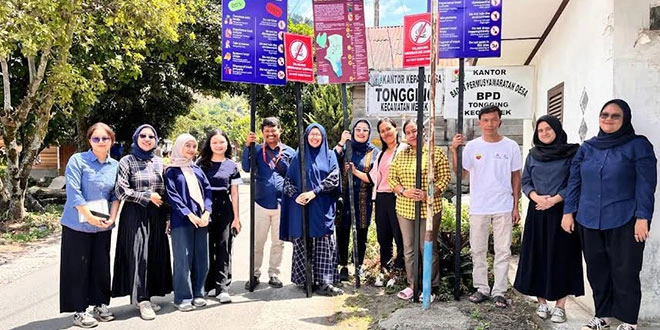
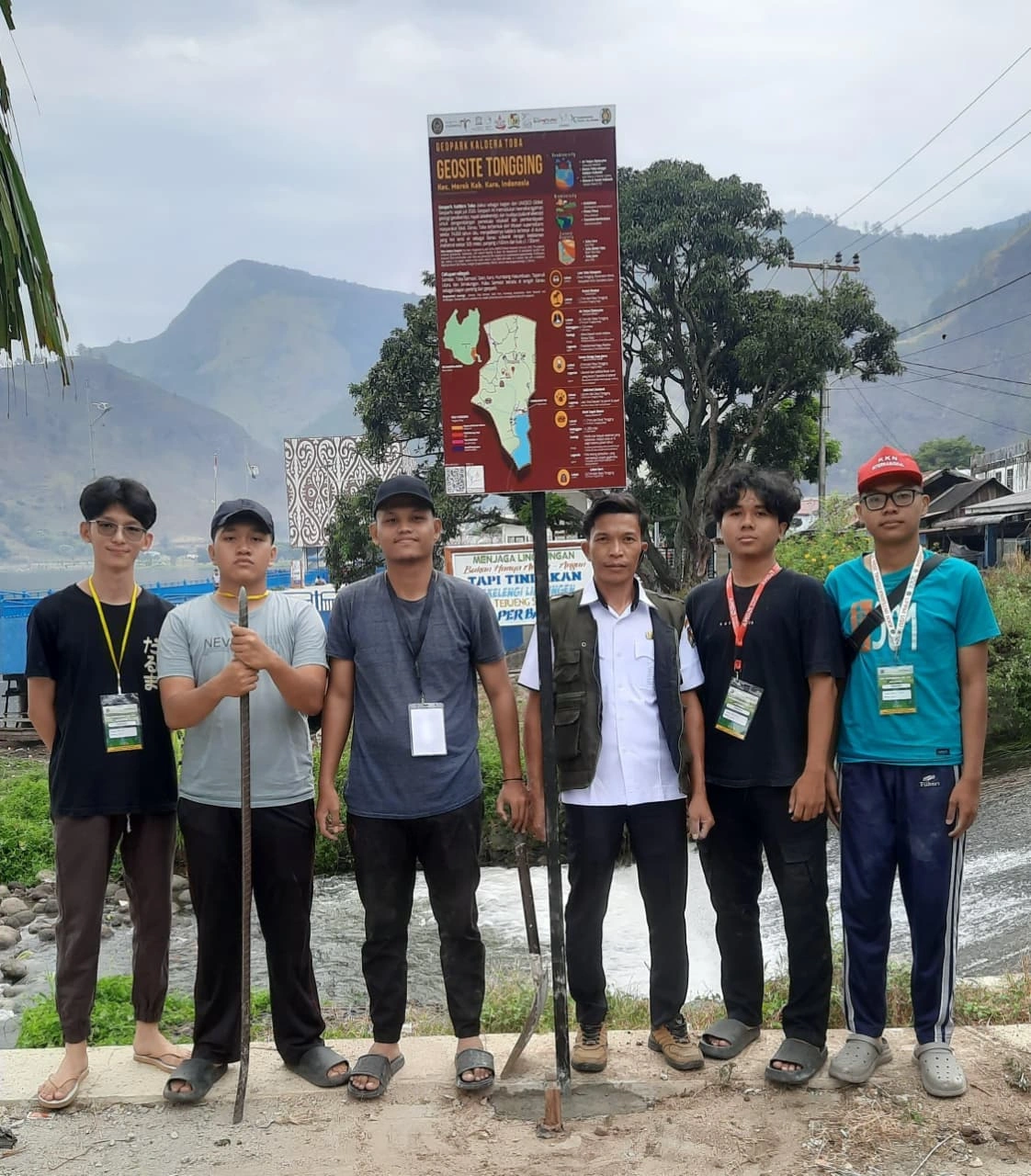
As a concrete form of support for tourism management, the USU team installed informative signage at the Tongging Geosite. The signage provides general information, instructions, and prohibitions, including signs forbidding the burning of waste to protect environmental quality and visitor comfort.
Additionally, brochures containing guidelines on sustainable tourism practices were distributed to residents. These brochures outline simple steps that can be applied in daily life, such as reducing single-use plastics, using local products, and managing household waste.
This activity also opened a dialogue between academics, government, and the community to formulate long-term strategies for developing Tongging Village as a sustainable tourist destination.
This cross-sector collaboration serves as an essential foundation for building an inclusive and resilient tourism ecosystem.
In her presentation, Prof. Nurlisa Ginting emphasized that the success of sustainable tourism depends greatly on active community participation. “The key to successful sustainable tourism lies in community participation. When residents understand the principles of sustainability, they become not only economic actors but also guardians of the environment and local culture,” she said.
The Tongging Village Government also hopes that this activity will strengthen the village’s capacity to develop a competitive and sustainable tourist destination.
The Karo Regency Government is also expected to remain committed to supporting initiatives that promote community-based tourism development.
Through this series of activities, USU hopes that Tongging Village can serve as a model for sustainable tourism villages not only in North Sumatra but also for other tourism villages.
With its extraordinary natural potential, rich local culture, and strong spirit of collaboration, Tongging has all the elements necessary to grow as a destination that is visually appealing and socially, economically, and ecologically resilient.
Going forward, continued synergy among academics, government, the local community, and businesses is needed to ensure that sustainability principles are fully integrated into all aspects of tourism management.
USU remains committed to providing continuous support and making tangible contributions through research, education, and community service. Thus, tourism in Tongging Village is expected not only to generate income but also to serve as a tool to strengthen local identity, improve community welfare, and preserve natural and cultural heritage for future generations. (wol/azr)